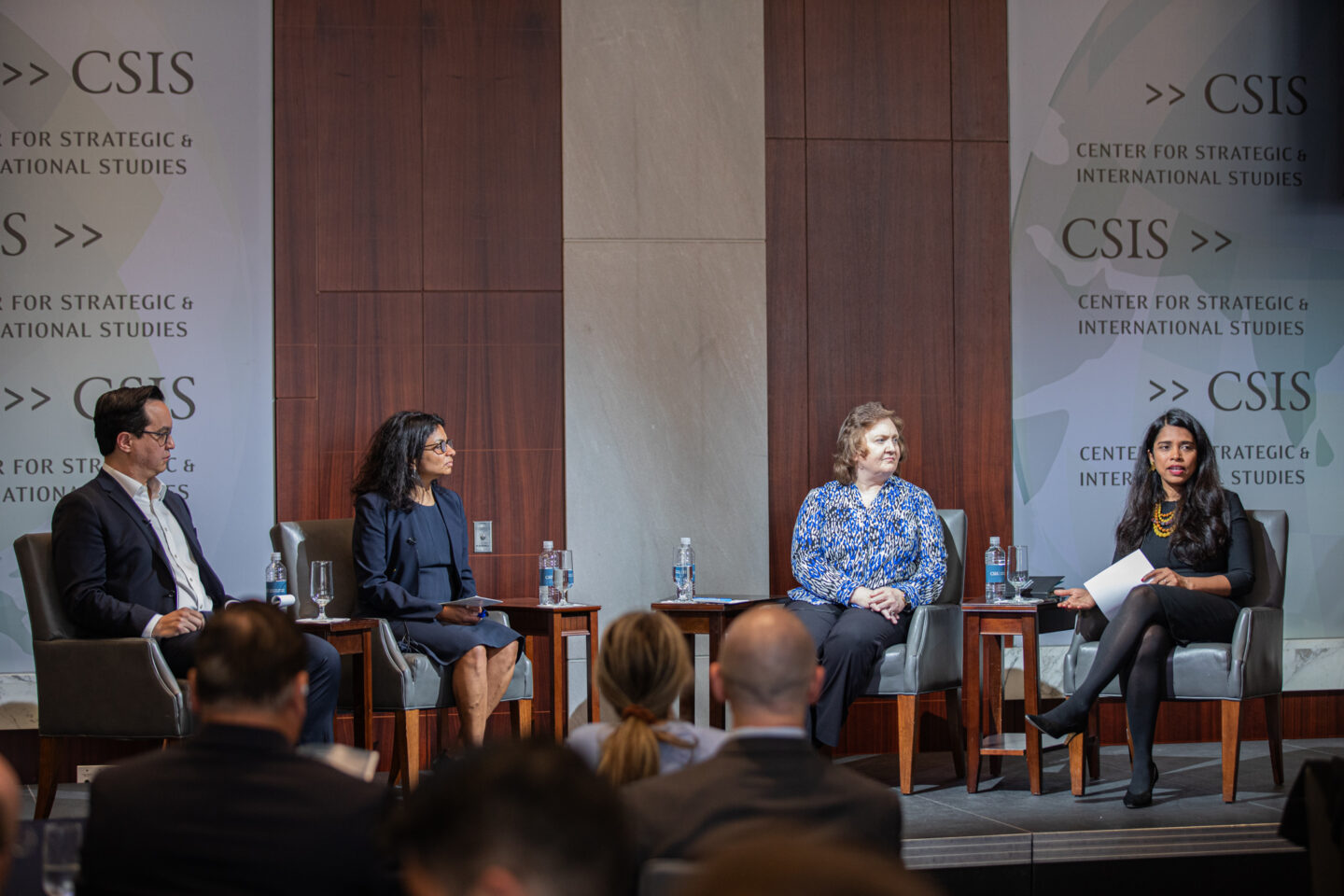

(Transcript) 2024 LeadershIP Conference Panel II: Intellectual Property and Artificial Intelligence

This transcript is from the 2024 LeadershIP Conference hosted at CSIS on April 9th, 2024. Watch the full video here.

(DOWNLOAD) LeadershIP 2024 – Panel 2 Transcript

Panel Description: The Artificial Intelligence revolution has raised key questions that society has yet to answer, from pending litigation over training data ownership to questions around AI inventorship. This panel explores the pressing issues at the intersection of AI and IP relating to patents, copyrights, and trademarks.

Speakers

Dr. Kirti Gupta, Executive Director, LeadershIP

Dr. Lynne E. Parker, Associate Vice Chancellor and Director, AI Tennessee Initiative, University of Tennessee

Rama Elluru, Senior Director for Society and Intellectual Property, Special Competitive Studies Project

Phil Hill, Special Counsel, Covington

Securing the Future of the U.S. Biopharmaceutical Industry: The Most-Favored-Nation Paradox

By Sujai Shivakumar and Anne Pritchett The Trump administration is pursuing lowering prescription drug costs primarily to end what it describes as “global freeloading” and to ensure U.S. patients pay prices comparable to those in other developed nations. The administration argues that while the United States represents less than 5 percent

Read More

Universities, Patents, and the Future of U.S. Competitiveness

By Shruti Sharma and Chris Borges Universities are among the most powerful engines of U.S. innovation, transforming federal research investments into scientific discoveries that underpin economic growth, technological leadership, and national security. Current law, via the Bayh-Dole Act, allows universities to patent inventions and license them to private companies, with royalties
Read More

How Counterfeit Drugs Threaten U.S. Health and Innovation

By Anne Pritchett According to the Department of Homeland Security, counterfeit drugs “threaten national security and public safety directly when introduced into government and critical infrastructure supply chains, and indirectly if used to generate revenue for transnational criminal organizations.” Furthermore, counterfeit drugs harm pharmaceutical innovation by eroding profitability and investor
Read More