(Transcript) 2024 LeadershIP Conference Panel I: National Security: Innovation, Intellectual Property, and International Competitiveness

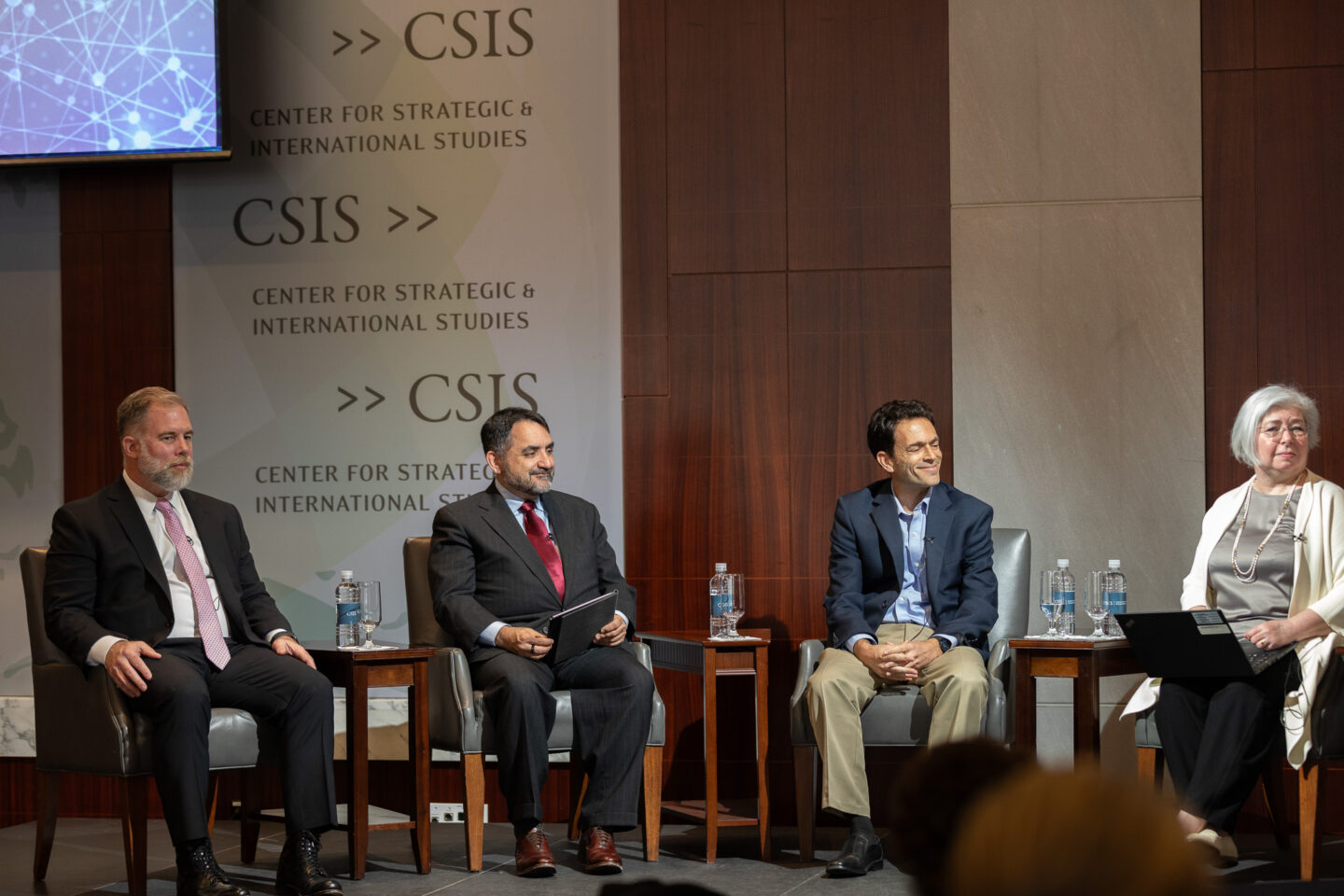
This transcript is from the 2024 LeadershIP Conference hosted at CSIS on April 9th, 2024. Watch the full video here.

(DOWNLOAD) LeadershIP 2024 – Panel 1 Transcript

Panel Description: The ongoing global IP policy developments are impacting U.S. technological and economic competitiveness. From March-In rights to Standards Essential Patents (SEPs), how do these developments impact the U.S. industries from biopharmaceuticals to wireless communications to semiconductors?

Speakers

Hon. Dr. Walter G. Copan, Senior Adviser (Non-resident), Renewing American Innovation Project, CSIS

Prof. Jonathan Barnett, Torrey H. Webb Professor of Law, University of Southern California

Patrick Kilbride, Senior Vice President, Global Innovation Policy Center, US Chamber of Commerce

Gillian M. Fenton, Special Counsel – Innovation and Government Collaboration, GSK

Fabian Gonell, Senior Vice President, Licensing Strategy and Legal Counsel, Qualcomm
 

Securing the Future of the U.S. Biopharmaceutical Industry: The Most-Favored-Nation Paradox

By Sujai Shivakumar and Anne Pritchett The Trump administration is pursuing lowering prescription drug costs primarily to end what it describes as “global freeloading” and to ensure U.S. patients pay prices comparable to those in other developed nations. The administration argues that while the United States represents less than 5 percent
Read More

Universities, Patents, and the Future of U.S. Competitiveness

By Shruti Sharma and Chris Borges Universities are among the most powerful engines of U.S. innovation, transforming federal research investments into scientific discoveries that underpin economic growth, technological leadership, and national security. Current law, via the Bayh-Dole Act, allows universities to patent inventions and license them to private companies, with royalties
Read More

How Counterfeit Drugs Threaten U.S. Health and Innovation

By Anne Pritchett According to the Department of Homeland Security, counterfeit drugs “threaten national security and public safety directly when introduced into government and critical infrastructure supply chains, and indirectly if used to generate revenue for transnational criminal organizations.” Furthermore, counterfeit drugs harm pharmaceutical innovation by eroding profitability and investor
Read More