Thibaut Kleiner

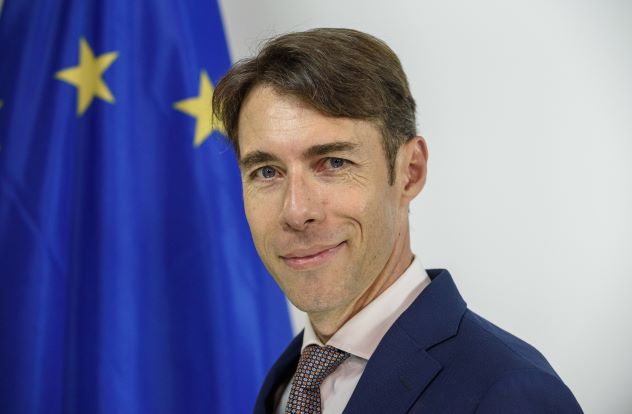
Thibaut Kleiner is the Director for Policy, Strategy and Outreach at DG Connect. He has worked since 2001 at the European Commission. The first ten years of his career in the Commission were spent in the area of competition policy (merger, antitrust and State aid). He was notably member of the cabinet of Neelie Kroes, Commissioner for Competition, in 2007-2010 and head of unit for State aid coordination in DG Competition. In September 2011, he moved to the digital policy area, as advisor of Vice-President Neelie Kroes, in charge of the Digital Agenda, and supervised Internet policies at large (Internet Governance, cybersecurity, cloud, data). From January 2014 to June 2016, he was head of unit in charge of network technologies (5G and Internet of Things) in DG Connect. From June 2016 to December 2019 he was the deputy head of cabinet of Commissioner Oettinger, in charge of Budget and Human Resources and he then came back to DG Connect to head the unit in charge of Research Strategy and Coordination. An economist by training, Thibaut holds a Master from HEC Paris and a PhD from the London School of Economics.

Securing the Future of the U.S. Biopharmaceutical Industry: The Most-Favored-Nation Paradox

By Sujai Shivakumar and Anne Pritchett The Trump administration is pursuing lowering prescription drug costs primarily to end what it describes as “global freeloading” and to ensure U.S. patients pay prices comparable to those in other developed nations. The administration argues that while the United States represents less than 5 percent
Read More

Universities, Patents, and the Future of U.S. Competitiveness

By Shruti Sharma and Chris Borges Universities are among the most powerful engines of U.S. innovation, transforming federal research investments into scientific discoveries that underpin economic growth, technological leadership, and national security. Current law, via the Bayh-Dole Act, allows universities to patent inventions and license them to private companies, with royalties
Read More

How Counterfeit Drugs Threaten U.S. Health and Innovation

By Anne Pritchett According to the Department of Homeland Security, counterfeit drugs “threaten national security and public safety directly when introduced into government and critical infrastructure supply chains, and indirectly if used to generate revenue for transnational criminal organizations.” Furthermore, counterfeit drugs harm pharmaceutical innovation by eroding profitability and investor
Read More